Chat
E-mail
Bel ons
Maatwerk

A Print file, how to make it?

If you have ever ordered a brochure or a book, no doubt you came across the term ‘print files’. It is important that your print file meets a number of requirements. This is to ensure you do not end up with a product that is different from what you had in mind.


scroll on

Print files: what should you bear in mind?

First and foremost, it is important that you supply a ‘PDF’, preferably a ‘Certified PDF (cPDF)’. This is a special type of PDF that we can be certain is a closed print file, suitable for printing. If you work with a graphic designer or are a designer yourself, you probably use InDesign or another graphics program. You should then convert this file into a PDF.

Word, PowerPoint or Excel are not graphic design programs and are therefore not suitable for creating a print-ready file. If you have created a file yourself in Word or another non-graphic design program, we can help you convert it into a print-ready file. Alternatively, you can ask your own designer to do this for you.


Bleed in print file

When preparing a print file, it is recommended that you allow for a minimum bleed of 3 mm. This is to ensure that your images and any backgrounds extend beyond the trim line. In short, this means that your image extends beyond the trim line. This is because a printer needs certain margins to trim the printed material. By ensuring your images extend beyond the trim line, you prevent white borders from appearing around your images after trimming.

Printing

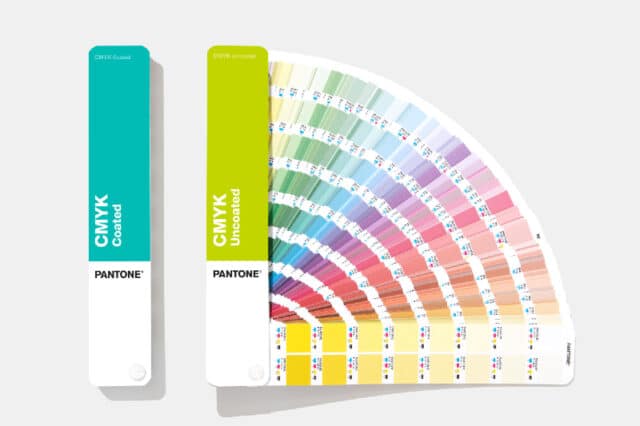
When deciding on the file specifications for your book (or magazine/catalogue), you also chose the printing method for the cover and the interior. You may have opted for full-color (also known as CMYK), for black printing (often used in reading books), or perhaps you have chosen to combine one of these two options with one or more PMS colors. The most important thing is that when preparing your print file, you ensure you use the correct printing method. If you submit a full-color file whilst having chosen black printing, the file will need to be adjusted.

Please note: black text can also be created using CMYK; you will see black, but multiple colours have been used. We recommend always creating text using 100% black. This ensures the text is printed more crisply and is therefore easier to read. If you have opted for CMYK printing, it is important that you do not use RGB (digital colours) or PMS colors. We will then ask you to adjust the print file. If you use photos or images in your printed materials, we recommend a minimum resolution of 300 dpi for the best results. If you use images with a dpi lower than 300, you will find that the photos appear grainy and lack sharpness. In short, not a pretty sight.

Double check

When we receive your files, we carry out our own check on a number of standard points, including the print layout, bleed and dimensions. If we do not see anything unusual, we will forward your files to the printer. The printer’s pre-press department also checks the print files and then runs them through a RIP. If no issues arise, you will receive a digital proof (for offset printing). This will be sent to you for approval. Once you have given your approval, we will proceed to print your book, magazine or catalog. If digital printing is used, you will not receive a digital proof, as this is not necessary with this form of printing.


Send us the specifications of your book and we will make sure that you receive a tailor-made price quote.

Calculate the price now
New Energy Printing

T

+31 (0)347 779 407


M

info@newenergy.nl


A

Mijlweg 9-6,

4131 PJ Vianen,

The Netherlands

Opening hours

Mon – Fri:  08:30 AM – 05:00 PM
Sat – Sun Closed

Je bezoekt newenergy.nl/en

Wist je dat we ook een Nederlandse website hebben?

Naar de Nederlandse website

You're visiting newenergy.nl/en

Were you looking for the English (US) version?

Take me there

You're visiting newenergy.nl/en

Were you looking for the English (UK) version?

Take me there